How a $1 Trillion Chip Wipeout Became Wall Street's Summer Obsession
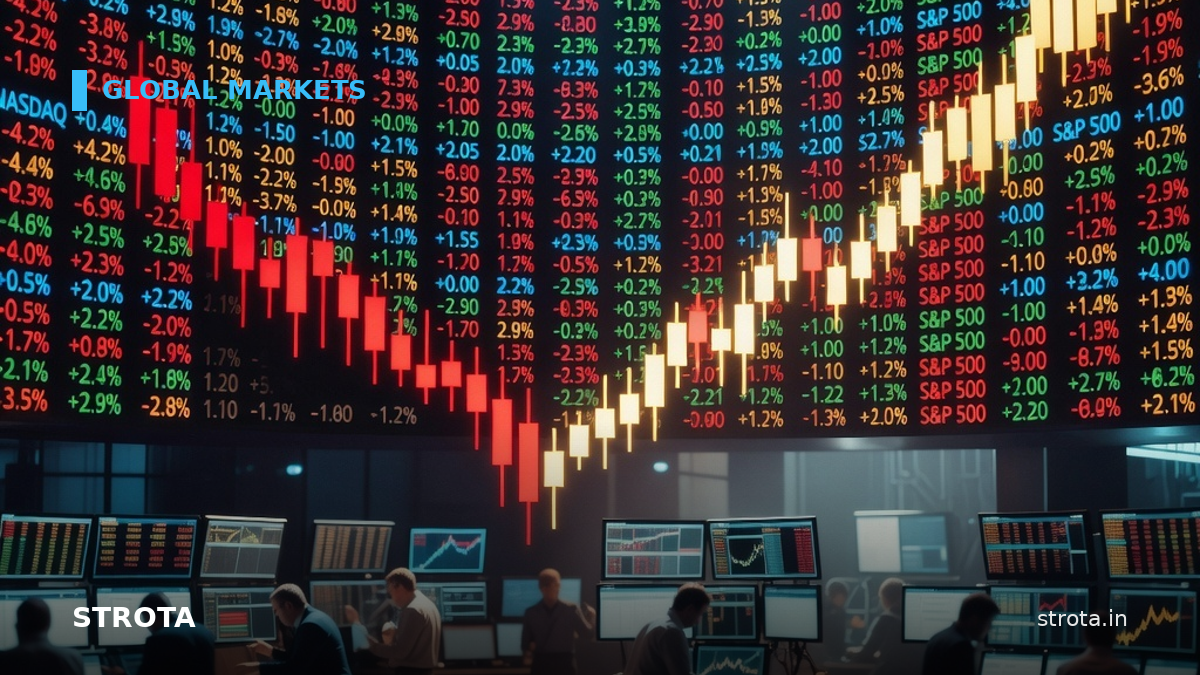
It started with euphoria. The S&P 500 and Nasdaq were hitting record after record, powered by a chip rally so relentless it seemed unstoppable. The Philadelphia Semiconductor Index was surging. Nvidia, AMD, Micron—the names were minting fortunes. Then, in what felt like hours, the floor dropped out.
By late July, chip stocks had erased $1 trillion in value. The Nasdaq plummeted 2.3% in a single session. South Korea's KOSPI cratered nearly 4%, then 10%. Samsung and SK Hynix shares collapsed over 9%. SoftBank sank more than 9%. What began as Wall Street jitters became a global contagion, spreading from Silicon Valley to Seoul to Tokyo faster than any human trader could react.
The trigger? A perfect storm of AI skepticism, geopolitical dread, and something more mechanical: 'push-button liquidity' and massive margin calls that forced automatic selling. When China's Moonshot AI unveiled its Kimi K3 model—reportedly built with fewer advanced chips—investors suddenly questioned whether the billions pouring into AI infrastructure would ever pay off. One breakthrough in Beijing rewrote the math on every data center from Arizona to Taiwan.
The irony cut deep. For months, Wall Street had punished any company not spending enough on AI. Oracle, despite strong cloud revenue and a massive backlog, saw shares crash 65% from their peak as investors fixated on rising debt and capital expenditure. Intel arrived at earnings with the market already questioning whether the AI chip rally had run too far. The same growth story that built the boom now threatened to bury it.
Yet markets this manic rarely move in straight lines. Within days, the same chipmakers were rallying 5%. Morgan Stanley declared the memory stock sell-off a 'prime buying opportunity.' The S&P 500 rebounded. Analysts called the Kimi K3 panic 'irrational.' The Philadelphia Semiconductor Index gained over 2%. What changed? Nothing fundamental—just the algos reversing, and enough buyers willing to bet that AI demand wasn't disappearing because one Chinese lab got clever.
Through it all, the broader indices told a more complicated story. The Dow hit records even as tech cratered. Bank earnings smashed records—Goldman Sachs posted its best quarter ever—suggesting the real economy hadn't stopped humming. Cooling inflation data fueled rate-cut hopes. But oil prices kept jumping on US-Iran tensions, and every diplomatic headline sent futures swinging.
The human cost surfaced in quieter stories. PayPal, once a Wall Street favorite, faced a $53 billion takeover bid from Stripe and Advent International at $60.50 per share—a price its board rejected as too low. The pioneer of digital payments, now struggling against Apple Pay, had become an unwilling merger target. Netflix whiffed on earnings guidance and watched shares tumble. IBM suffered what some called an 'epic stock crash,' prompting calls to break up Big Blue. Elon Musk's net worth slumped amid Tesla and SpaceX declines. Even the brokers felt it: Robinhood dropped 4%, Webull 6% as the Nasdaq 100 selloff hit retail trading platforms.
What makes this episode matter beyond the trading screens is what it reveals about modern markets. The same forces that amplified the AI boom—the options-driven 'Magnificent Seven' concentration, the passive fund flows, the leveraged ETF dynamics—magnified the crash and then the recovery. Bearish bets on the S&P 500 surged to record levels even as the index rallied 18%. JPMorgan raised its S&P target to 7,800 while warning of 'flash crash' risk. The market has never been more liquid and more fragile at the same time.
For anyone watching their 401(k) or wondering whether to open a brokerage account, the lesson isn't about timing chip stocks. It's about recognizing that the ground beneath global markets has shifted. A Chinese AI announcement can wipe out a trillion dollars in hours. A Middle East skirmish can override solid corporate earnings. The machines trade faster than the news can be understood.
The chip sell-off will likely fade into another entry in the market's growing catalog of flash panics. But the pattern it exposed—the hyperspeed transmission of fear and greed across interconnected markets, the fragility of consensus trades, the gap between AI promise and AI profit—will keep repeating. Wall Street's summer obsession wasn't really about semiconductors. It was about learning, again, that the future arrives faster than the models predict, and the margin calls don't wait for anyone to catch their breath.
Sources and method
- How PayPal went from Wall Street favorite to unwilling merger target (Economic Times)
- Downfall of a Wall Street darling: Why Oracle shares crashed 65% from peak (Economic Times)
- Nasdaq, Dow, S&P 500 Futures Rise As Wall Street Seen Shrugging Off US-Iran Jitters (NDTV Business)
- Wall Street Slips on Iran Tensions; Tech Selloff Deepens (HDFC Sky)
- Intel earnings arrive as Wall Street questions the AI chip rally (calcalistech.com)
- China’s Moonshot AI Adds More Fuel to Wall Street’s Chip Selloff (WSJ)
- Nasdaq, Dow, S&P 500 Futures Slip As Chip Selloff Overshadows Strong Earnings Season: NFLX, SNDK, SPCX, MRVL Stocks In Focus (TradingView)
- Intel, AMD, Nvidia, Micron Rally Up To 5% As Chipmakers Regain Spark On Wall Street (NDTV Profit)
More money stories
- Thirteen Nifty stocks dragged the index for five years — and active funds noticed
- Copper at a record $14,533 a ton, and a new rival: the double squeeze on India's cable makers
- Asian Markets Slip as AI Stocks Weigh Ahead of Nvidia's Earnings Test
- IPO subscription tracked listing gains across 431 Indian IPOs, but it works as a sorter, not a direction call
- New moon, full moon, same Nifty: 19 years of data show no reliable lunar effect
- RBI opens a dollar window for 3 oil firms as the rupee nears 97