The Five Words That Destroyed a Family's Savings: 'I Decided to Touch My Parents' Investment'
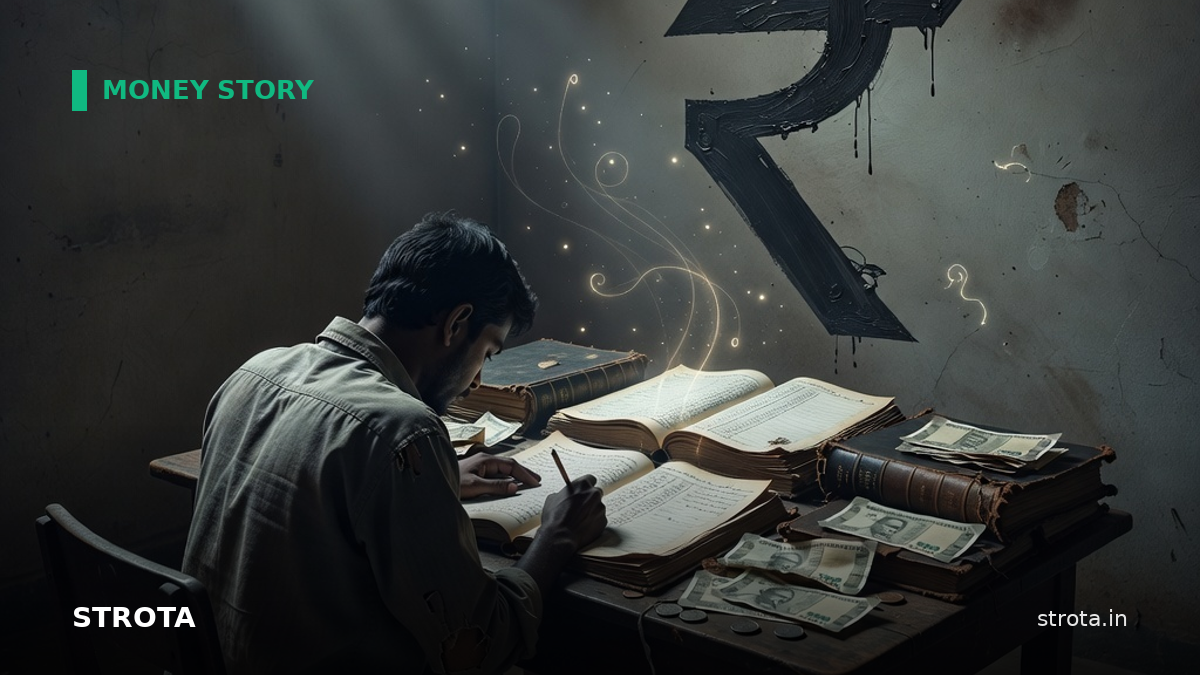
The post starts like a thousand others in the corners of Reddit where people confess their worst financial mistakes. But five words in, the stomach drops: 'I decided to touch my parents' investment.'
They had no idea. The poster never says what the investment was—stocks, crypto, something riskier. What matters is the architecture of the lie. The money sat there, perhaps growing slowly, perhaps just sitting. And the child, old enough to access accounts, young enough to believe in the exceptionality of their own luck, decided they could do better.
Fast forward, the post continues. The phrase hangs in the air like smoke. Fast forward past the research that felt like due diligence, past the first small win that felt like confirmation, past the escalating bets that felt like recovering what was already gone. Then the margin call, the liquidation, the number that reads zero where six or seven figures once lived.
The parents still don't know. That detail, offered almost as an afterthought, transforms the story from a familiar tale of investment loss into something more claustrophobic. Every family dinner becomes a performance. Every casual question about money becomes a near-miss. The debt isn't just financial anymore—it's existential, compounding in silence.
What makes this confession land with such force is its structural familiarity. The source material shows this pattern everywhere: the Houston woman who answered a fraud alert text and 'lost everything,' the Georgia seniors in the state's largest Ponzi scheme, the FTX customers who 'weren't rich but wanted to invest.' The specific mechanics change—phone scams, collapsed exchanges, high-leverage trading—but the emotional grammar stays constant. The before-period of ordinary life. The during-period of suspended disbelief. The after-period of trying to locate the exact moment when reversible became irreversible.
The Reddit poster's particular horror is the added layer of transgression. This wasn't their money to lose. The parents' investment represented years of deferred consumption, of saying no to smaller things so that someday they could say yes to security. The poster understood this enough to hide what they were doing, which means they understood it enough to know, at some level, that they shouldn't.
There's a genre of financial disaster story that focuses on the technical mistake—the leverage ratio, the unaudited exchange, the psychic who advised an $80 million crypto bet. These stories offer readers the comfort of distance. I would never. But the Reddit confession offers no such insulation. The instrument hardly matters. What matters is the psychology of chasing losses, the conviction that a big enough bet can restore not just the money but the narrative of competence, the self-image of someone who makes good decisions.
The source material includes its own gallery of this particular delusion. The man who lost everything in private credit and 'wishes several thousand more people had warned him.' The teen boys at crypto casinos. The investor who put life savings into NVIDIA and discovered that 'timing is everything'—not the stock, but the moment of entry and exit, the discipline to leave the table. Each one describes a slightly different path to the same destination: the moment of looking at a screen and understanding that the number will not recover, that the story of this money has reached its final chapter.
For the Reddit poster, that moment came with an additional twist. The money wasn't just gone. It was gone and hidden, a secret loss eating at the foundation of family trust. The post doesn't describe what comes next—whether confession or continued concealment, whether gradual repayment or permanent estrangement. The 'fast forward' that bridges decision and consequence doesn't extend to resolution.
This is where the story becomes most useful to anyone reading it without similar catastrophe in their recent past. The source material includes survivors: the business owners who 'lost everything and built back bigger,' the woman who rebuilt 'through trust' after financial devastation. But these are long arcs, measured in years. The immediate aftermath has no such narrative shape. It has only the flat present tense of trying to sleep, of rehearsing explanations, of calculating whether the truth would be more destructive than the lie.
The broader pattern in the source material suggests something about the current moment. Financial instruments have become more accessible and more complex simultaneously. The same phone that lets a teenager deposit a paycheck lets them access leveraged derivatives. The same social media that warns about scams also promotes them, often indistinguishably. The Uniswap founder's complaint about scam crypto ads, included in the source material, describes an environment where the guardrails and the traps look increasingly similar.
What ordinary people can take from this—without sliding into the prohibited territory of advice—is a kind of structural humility. The Reddit poster's mistake began with the assumption that they could improve on their parents' strategy without their parents' knowledge. This assumption of superior information, of being early to something others were too cautious to see, appears across nearly every story in the source material. It is the common denominator linking the Cardano CEO's five-year bet with the Delhi teacher's hour-long scam call, the Terra stablecoin believers in Argentina and Nigeria with the 'King of Crypto Liquidations' losing $75 million in six months.
The poster never says how much was lost. In a way, the number matters less than the ratio: all of someone else's security, converted to nothing, without their consent. The post ends where these confessions usually end—not with a lesson, but with a kind of stunned witnessing. Fast forward. The words suggest time moving quickly, the way it does in moments of crisis and the way it doesn't in the long aftermath. The parents still don't know. The reader, now complicit with this knowledge, closes the tab and returns to their own accounts, their own temptations, their own unspoken calculations about what they might handle, what they might recover, what they might hide.
Sources and method
- Crypto Confession: "I decided to touch my parents’ investment. They had no idea. Fast forward, I lost everything." (Yahoo Finance)
- Uniswap founder slams scam crypto ads after victim ‘lost everything’ (TradingView)
- I Lost Everything In Crypto... (Vocal)
- Investor who lost everything in private credit wishes several thousand more people had warned him of the risks (MarketWatch)
- Rs 2.4 crore salary without IIT or IIM: Father lost everything in stocks, son says 'life has been wonderfu (The Economic Times)
- They lost everything in the WazirX heist. Now they pin their hopes on the country's courts for justice (YourStory.com)
- Anvil CEO Says He Lost Everything After Five Years Betting on Cardano (CryptoRank)
- Teen Boys Are Losing Everything at Crypto Casinos (VICE)
More money stories
- CBI books Subhash Chandra over an alleged ₹1,322-crore loss to LIC Housing Finance
- IPO subscription tracked listing gains across 431 Indian IPOs, but it works as a sorter, not a direction call
- New moon, full moon, same Nifty: 19 years of data show no reliable lunar effect
- RBI opens a dollar window for 3 oil firms as the rupee nears 97
- Banks pay 5.67 per cent on new deposits while your EMI rises
- Air India adds Rs 1,200 fuel surcharge as jet fuel hits Rs 137