When $50 Billion Vanished in a Morning: How One Bank's Bad Day Shook India's Market
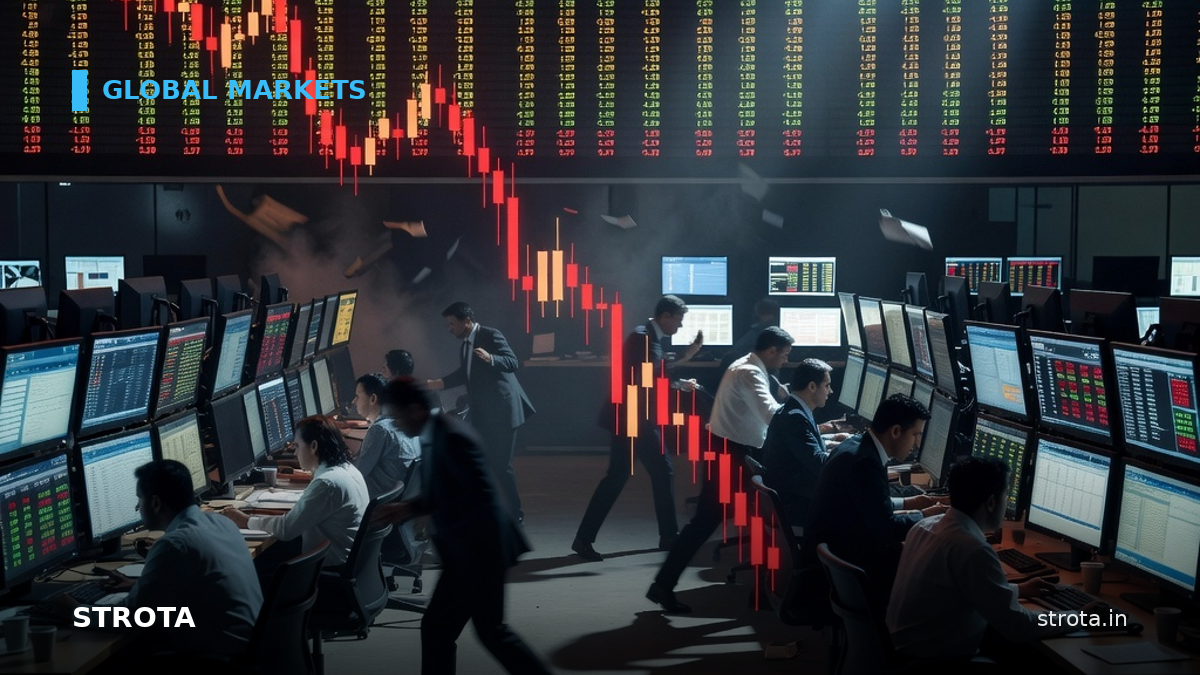
The alert came before breakfast. By 9:30 AM in Mumbai, the numbers were already brutal: the Nifty had crashed below 24,000, the Sensex was bleeding 800 points, and somewhere in the electronic ether, Rs 4.2 lakh crore of investor wealth had simply evaporated. For millions of Indians who had checked their portfolios over morning tea, it was the kind of gut-punch that turns an ordinary Tuesday into a reckoning.
The immediate trigger was deceptively simple. HDFC Bank, the country's largest private lender and a heavyweight in every major index, had reported quarterly earnings that fell short on margins. The stock dropped 2% for a second straight day, dragging the entire benchmark down with it. When a bank that size stumbles, the ripples reach everywhere—mutual funds, pension accounts, the small investor who bought shares last month hoping for steady returns.
But the real story lay in what happened next, and why.
While Indian markets were cratering, something curious was unfolding across the world. In Seoul, the Kospi surged 5%. Tokyo's Nikkei held steady in green territory. Wall Street, which had spent days nursing losses, suddenly found its footing as semiconductor stocks—the same chips that power everything from smartphones to AI data centers—mounted a sharp recovery. The Nasdaq jumped 1%, then 1.29%, as investors bet that the artificial intelligence boom still had room to run.
The contradiction was stark. Global investors were buying the dip in technology. Indian investors were fleeing.
What separated the two was oil, and the shadow of war.
Brent crude had surged past $94 a barrel, driven by fresh U.S. military strikes on Iran and new tariff threats from President Donald Trump. For India, the world's third-largest oil importer, this wasn't a distant geopolitical headline—it was an immediate tax on everything. Higher crude means wider trade deficits, weaker rupees, squeezed corporate margins, and eventually, higher prices at the petrol pump. The Nifty Auto index managed a 0.76% gain, but Energy, FMCG and Metal stocks were climbing for the wrong reasons: inflation hedging, not growth optimism. Everything else—IT, Banks, Realty, even Defence stocks—sold off.
The broader market told an even grimmer story. The Nifty Smallcap 250 fell almost 1%. The Midcap 150 dropped 0.68%. These are the stocks owned by India's growing retail investor class, the dentists and engineers and small business owners who opened brokerage accounts during the pandemic boom. They had been told the smallcap story was different, more insulated. Tuesday proved it wasn't.
Yet the most revealing detail came from watching what professional money did while retail panicked.
Wall Street's semiconductor rally wasn't random. Investors were positioning ahead of earnings from Alphabet, Tesla, and the chipmakers that supply the AI revolution. GE Vernova, a power infrastructure company spun off in 2024, had surged over 500% as investors realized AI data centers will need enormous electricity. The bet wasn't on chips alone—it was on the entire ecosystem of energy, infrastructure, and industrial capacity that makes AI possible.
Indian markets had no such narrative to cling to. The HDFC Bank disappointment landed at exactly the wrong moment, when oil fears were peaking and global risk appetite was fragile. The result was a 10-day low for both major indices, and a reminder of how quickly sentiment shifts.
By the closing bell, some stability returned. The Nifty recovered slightly to 24,238. The Sensex settled at 77,708. But the damage to confidence was done. For every investor who sat through the morning's 800-point drop, the lesson was personal: in a connected world, your portfolio is hostage to events you cannot control—a bank's margin compression, a missile strike in the Middle East, a tweet about tariffs.
The broader takeaway is uncomfortable but necessary. Diversification across stocks isn't enough when correlations spike during crises. The same oil shock that hurts India helps some American industrial companies. The same AI boom that lifts Nasdaq chips exposes Indian IT services to margin pressure. What looks like a global opportunity set can become a global risk network without warning.
For ordinary investors, Tuesday's crash wasn't really about HDFC Bank's quarterly numbers. It was about living in a market where $50 billion can disappear before lunch, where your financial security depends on parsing geopolitical headlines, and where the only certainty is that the next surprise is already being manufactured somewhere—perhaps in a data center in Nevada, perhaps in a shipping lane near Hormuz.
Sources and method
- Stock Market Crash: Investors Lose Rs 4.2 Lakh Crore As Nifty, Sensex Log Worst Fall In 10 Days (NDTV Business)
- Stock Market Crash News Today Live Updates: Nifty Slumps Below 24,000, Sensex Slides Over 800 Points; Brent Crude Surges Past $94 A Barrel (NDTV Business)
- Nifty Below 24,000, Sensex Down 800 Points: Three Reasons Why Market Is Falling (NDTV Business)
- Sensex Today | Nifty 50 | Stock Market Live Updates: GIFT Nifty signals a negative start; Asian shares trade higher (Economic Times)
- Asian Markets Today: South Korea's Kospi Jumps 5%, Nikkei In Green Despite US-Iran Strikes (NDTV Business)
- US stocks today: US stocks end higher as semiconductors surge amid Mideast war intensifies (Economic Times)
- Trade Setup For July 22: Nifty Finds Key Support At 24,000 As Market Consolidates Amid Weak Global Cues (NDTV Business)
- US Stock Market Today: Nasdaq Jumps 1% On Chip Rally; S&P 500, Dow Edge Higher On Earnings Boost (NDTV Business)
More money stories
- Asian Markets Slip as AI Stocks Weigh Ahead of Nvidia's Earnings Test
- The market went nowhere on Friday, and the nowhere was crowded
- Netweb and Sai Life lead a smallcap surge that is pushing an index to the brink of a record
- Estee Lauder is leaning on Tom Ford perfumes and Le Labo skincare to power a profit beat
- A chip sell-off swept Asia. A humanoid robot maker soared nearly 500% anyway.
- A 274-point open in New York, a 544-point climb in Mumbai: the morning two markets turned green at once