When the AI Trade Unravels: How One Week Shook Global Markets From Seoul to Wall Street
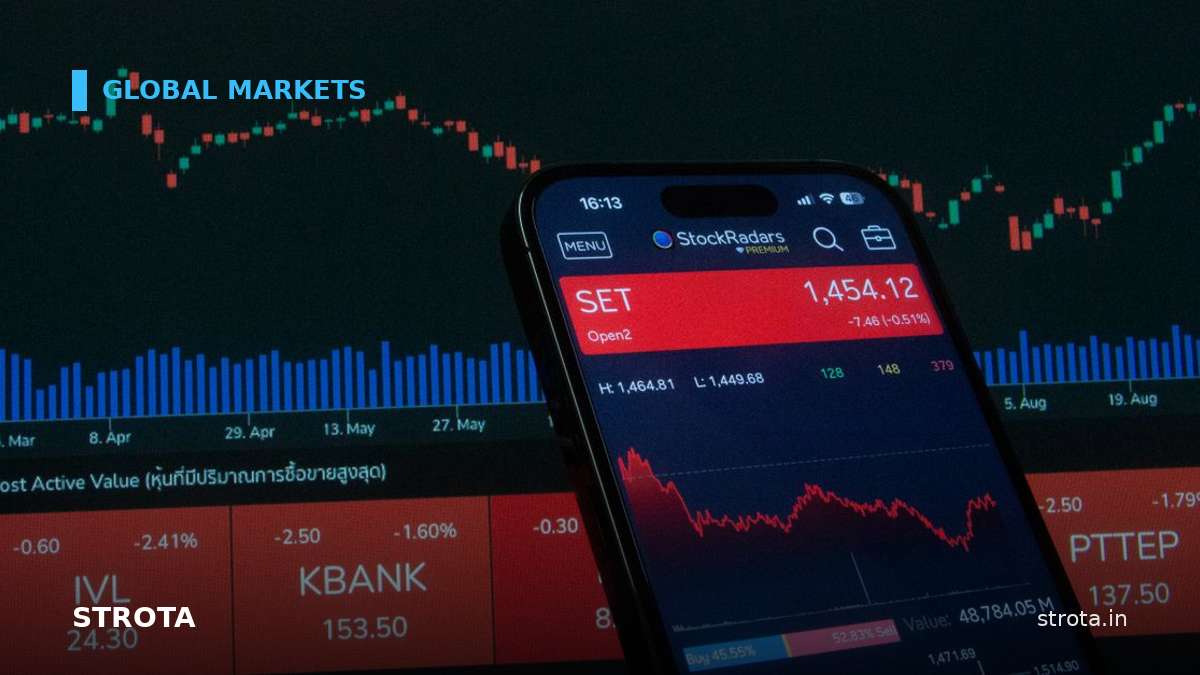
The warning signs flickered first in Seoul. Before most American investors had finished their morning coffee, South Korea's Kospi index had cratered 6%, with chip giant SK Hynix leading a brutal selloff that would soon ripple across time zones. By the time New York markets opened, the narrative had flipped twice already—tech stocks were suddenly toxic, then briefly precious again, then caught in crosscurrents that left even seasoned traders reaching for antacids.
This was not how the summer rally was supposed to unfold.
For months, the global bull market had ridden a simple, seductive story: artificial intelligence would transform everything, and the companies building its infrastructure—chipmakers, server manufacturers, cloud giants—would print money indefinitely. The Nasdaq had surged toward record territory. SK Hynix, a critical supplier of high-bandwidth memory for AI systems, had seen its American depositary receipts skyrocket 27% during one euphoric stretch. The party, it seemed, had no closing time.
Then the bill arrived.
The reversal began with whispers that the AI hardware trade had grown crowded, expensive, vulnerable. When Dell, Micron, and SanDisk tumbled in unison, the pattern became unmistakable: investors who had piled into the same names were now rushing for the same exits. The Nasdaq, which had been flirting with records, shed 1.55% in a single session, dropping to 25,873 as chip stocks led the decline.
IBM's annihilation added a separate trauma entirely. The century-old technology institution—hardly a speculative AI pure-play—plunged 24% after initial results disappointed Wall Street, vaporizing $69 billion in market value in a single day. The Dow Jones, already split between rallying bank stocks and collapsing tech names, absorbed the shock unevenly. Some sessions saw the blue-chip index rise despite IBM's crater; others saw the weight of Big Tech drag everything lower.
Meanwhile, a parallel crisis brewed in commodity markets. Brent crude surged above $85 a barrel, then kept climbing as tensions between the U.S. and Iran escalated. At one point, oil jumped 9% on fears of a Hormuz blockade—the kind of supply shock that simultaneously threatens corporate margins and consumer wallets. Gold, which had touched record highs earlier in the year, retreated as some investors sold winners to cover losses elsewhere.
The crosswinds created strange, disorienting patterns. On certain days, soft inflation data—cooling PPI prints, easing CPI readings—would spark rallies in rate-sensitive growth stocks, lifting the Nasdaq even as chip names faltered. Big banks, reporting record profits from trading and dealmaking surges, provided ballast for the Dow even as tech cratered. Morgan Stanley and Goldman Sachs posted quarter after quarter of record-smashing results, their swagger returning even as the market's confidence in AI infrastructure wavered.
But the contradictions could not hold indefinitely. When Asian markets opened mixed following Wall Street's attempted recoveries, the fragility showed through. The GIFT Nifty, India's early indicator for its benchmark indices, signaled marginal positivity at 24,105.50—yet the underlying tension remained. Every rally felt borrowed, every dip felt earned.
For ordinary investors watching from sidelines or 401(k) statements, the lesson was humbling. The same forces that had generated effortless-looking gains—concentration in a handful of AI-adjacent names, momentum chasing, geopolitical complacency—proved equally capable of reversing direction without warning. The semiconductor sector, which had powered the Nasdaq's best quarter since 2020, became its anchor. The oil price that had seemed a settled matter became a live threat.
What emerges is a portrait of markets in transition—between AI euphoria and AI sobriety, between rate-cut hopes and inflation vigilance, between the comfort of crowded trades and the danger of crowded exits. The S&P 500's 10.7% year-to-date gain through mid-2026 still registers as healthy by historical standards. But the path there has grown steeper, rockier, more dependent on parsing which headlines deserve attention and which represent noise.
The traders who thrived were not necessarily those who predicted the reversal, but those who survived it—who sized positions modestly enough to endure a 25% single-day drop in a household name, who diversified beyond the obvious AI plays, who remembered that even transformative technologies produce casualties among the companies building them. The rally, it turns out, was never as unanimous as it appeared. It only looked that way until it wasn't.
Sources and method
- ABB India Shares Jump 10% In Trade — What's Driving The Rally? (NDTV Business)
- Sensex Today | Nifty 50 | Stock Market Live Updates: GIFT Nifty signals a positive start; Asian shares trade lower (Economic Times)
- Stock Market News Today Live Updates: GIFT Nifty Points To Marginally Positive Open For Nifty, Sensex; Kospi Slumps 6%, Brent Crude Rallies Above $85 A Barrel (NDTV Business)
- Asian Stock Markets Today: Nikkei, Kospi Slide As AI-Fuelled Tech Rally Loses Momentum (NDTV Business)
- US Stock Market Today: Nasdaq Jumps As Software Stocks Bounce Back; S&P 500, Dow In Green (NDTV Business)
- Dow Jones| Nasdaq | S&P 500 | US Stock Market Today | Live: US stock futures tick up as investors weigh earnings; PayPal jumps (Economic Times)
- Markets end higher led by bank stocks; escalating U.S.-Iran hostilities weigh on investor sentiment (The Hindu Business)
- Stock Market Crash News Highlights: Nifty, Sensex Resume Gains After One-Day Breather; HDFC Bank, SBI Top Gainers (NDTV Business)
More money stories
- Thirteen Nifty stocks dragged the index for five years — and active funds noticed
- Copper at a record $14,533 a ton, and a new rival: the double squeeze on India's cable makers
- Asian Markets Slip as AI Stocks Weigh Ahead of Nvidia's Earnings Test
- IPO subscription tracked listing gains across 431 Indian IPOs, but it works as a sorter, not a direction call
- New moon, full moon, same Nifty: 19 years of data show no reliable lunar effect
- RBI opens a dollar window for 3 oil firms as the rupee nears 97