Gold Hits Rs 1.44 Lakh as Middle East Strikes Send Investors Scrambling for Safety
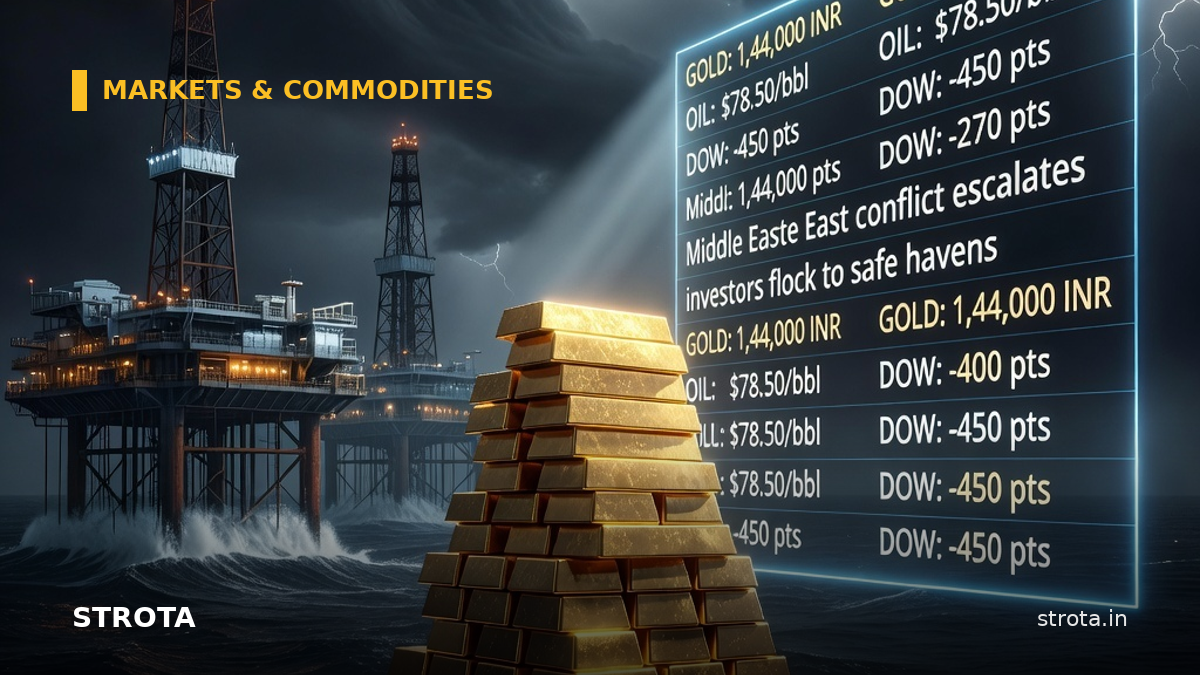
The alert came through like it always does — another escalation, another after-hours move in markets most people only notice when something breaks. This time, fresh US military strikes on Iran sent gold and silver prices surging on India's MCX exchange, turning a geopolitical headline into immediate, tangible gains for anyone holding the yellow metal.
By the close, MCX gold August futures had climbed 1.08%, or Rs 1,542, to reach Rs 1,44,301 per 10 grams. Silver wasn't far behind. The September futures contract added Rs 2,554 — a 1.14% jump — to settle at Rs 2,26,333 per kilogram. For context, that's roughly the price of a compact car, now the going rate for a single kilo of the white metal.
What makes this move worth watching isn't just the numbers. It's what they reveal about how quickly fear travels through financial markets. Gold and silver are often called 'safe havens' — assets investors buy when they worry about everything else. When missiles fly, when shipping lanes look threatened, when the price of oil starts climbing, money quietly shifts toward things you can hold in your hand.
The source material notes this pattern bluntly: 'Gold & Silver Capped: Oil Surge, Inflation & Hawkish Banks.' Translation — precious metals are facing competing pressures. On one side, conflict and inflation fears push prices up. On the other, central banks keeping interest rates high ('hawkish') makes gold less attractive, since it pays no interest unlike fixed deposits or bonds. The metal's recent strength suggests fear is currently winning that tug-of-war.
For the typical Indian investor, this story lands close to home. Gold isn't abstract here. It's wedding jewellery, it's family savings, it's the 10-gram biscuit tucked away for emergencies. When MCX prices move this sharply, they ripple through local jewellers, through loan valuations against gold, through the returns on sovereign gold bonds. Even someone who's never traded a futures contract feels it when they walk into a shop to buy a chain for a daughter's wedding.
The silver move deserves particular attention. A Rs 2,500 single-day gain on the futures market is unusual. Silver is more volatile than gold — it swings harder on industrial demand, on speculation, on the same safety-seeking flows. For small investors, it's also more accessible. You don't need lakhs to participate. That accessibility means sharper moves can catch people unprepared, in either direction.
What's striking is the speed. The US strikes happened. Markets absorbed the implications within hours. Prices adjusted. Someone holding gold futures woke up richer. Someone planning to buy physical gold for a festival found their budget stretched thinner. Geopolitics doesn't wait for quarterly earnings reports.
The broader picture here is about interconnectedness. An event thousands of kilometres away reshapes household finances in Mumbai or Chennai. Oil prices, which the source flags as a key factor, feed into inflation calculations, which influence what the Reserve Bank does with interest rates, which affects everything from EMIs to fixed deposit returns. Gold sits at the centre of this web — sometimes as beneficiary, sometimes as casualty.
For ordinary savers, the lesson isn't to chase the next geopolitical crisis. It's to recognise that these connections exist. The same global forces moving futures contracts on MCX also shape the price of the jewellery you inherit, the loan you might need, the real returns on your savings. Understanding that link, even vaguely, is more useful than any single trading tip.
The metals may pull back tomorrow. They may keep climbing. What won't change is this pattern — when uncertainty spikes, gold and silver remain where frightened money runs first. For millions of Indian families, that's not a trading strategy. It's generations of lived experience, now confirmed by another tick higher on the exchange board.
Sources and method
More money stories
- Bitcoin ETFs took in $999 million in a day as the price cleared $87,000
- Five straight weekly losses for Indian government bonds, and the reason starts in Washington
- A Fed Hike, a Rupee Near 96 and Why the RBI October Call Just Got Hard
- One oil shock, two opposite answers: Tokyo hikes to a 31-year high, London sits still
- Brent hit $107.05 after a Saudi pipeline went down, and Goldman Sachs sketched a $120 scenario
- Iran's claim on 10 ships took crude to $101, and put one hundred twenty dollars back in the conversation