How a Single Shipping Lane Became the World's Most Expensive Chokepoint
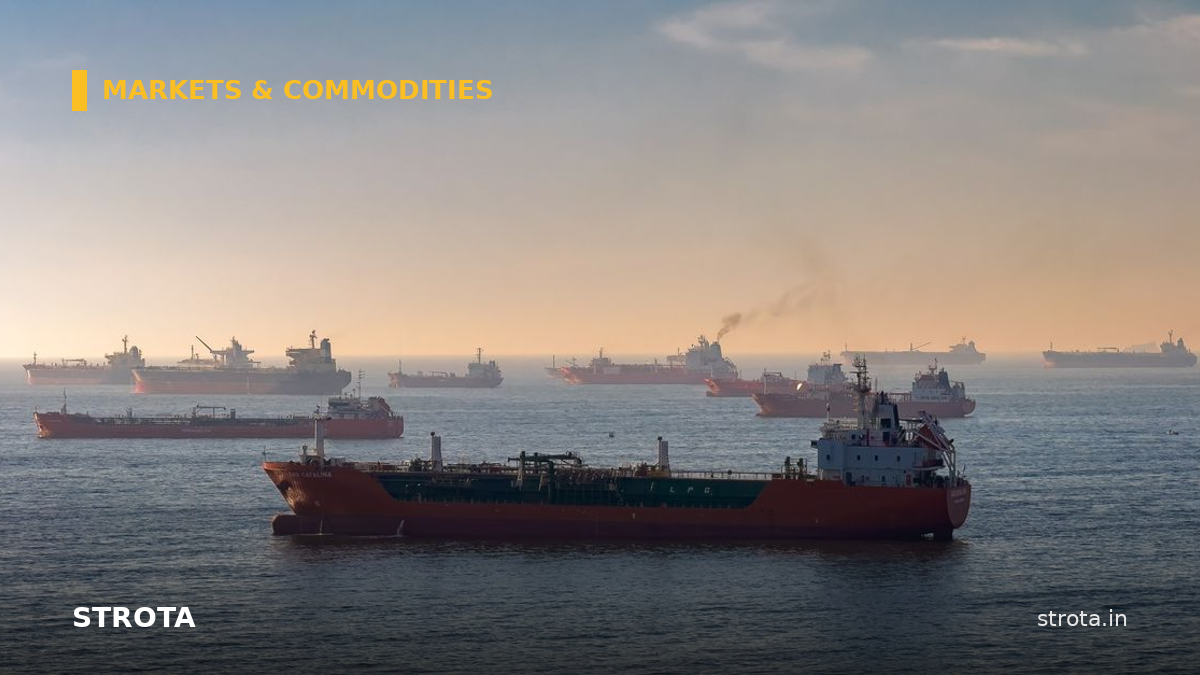
It started with the kind of headline that usually fades in a news cycle: strikes and counter-strikes between the US and Iran. But within 48 hours, the consequences rippled through gas stations in Chennai, airline boardrooms in Chicago, and trading floors in Mumbai. West Texas Intermediate crude broke $81 a barrel. Then $85. Then kept climbing. By the end of one week, oil had surged 15%, with some grades touching levels not seen in nearly four years.
The culprit wasn't just the fighting itself. It was geography. Roughly one-fifth of global oil shipments squeeze through the Strait of Hormuz, a 21-mile-wide channel between Iran and Oman. When Tehran threatened to block it and Washington responded with a maritime blockade of Iranian ports, traders did the math. Disrupt that flow, even partially, and the world faces an instant supply shock. The price of that fear got baked into every barrel overnight.
For ordinary people far from the Persian Gulf, the math became personal fast. In India, where nearly 85% of crude is imported, the rupee buckled toward record lows against the dollar. Higher import bills mean wider trade deficits, which mean weaker currency, which means even more expensive imports — a feedback loop that hits everything from petrol prices to monthly inflation prints. One analysis warned that a 50% oil price spike could add $20 billion to the import bills of vulnerable economies alone.
Corporate India felt it immediately. Foreign portfolio investors, who had been tentatively returning to Indian equities, pulled back. The Sensex opened cautiously green, defying the gloom only because some investors bet on defensive plays. But the underlying stress was unmistakable. MCX crude oil contracts surged in parallel. Gold, typically a refuge in chaos, swung wildly — touching ₹1.47 lakh per 10 grams on some days, then dropping as rate-hike fears resurfaced. Silver crashed ₹6,000 per kilogram in single sessions. Nothing behaved predictably because the source of risk was political, not economic.
The aviation sector offered the clearest window into how quickly costs accumulate. United Airlines warned of a nearly $6 billion fuel cost hit, a figure that translates directly into fare hikes or reduced routes for travelers. For an industry that models fuel prices down to the cent, a 14% move in five days isn't a line item — it's an existential replanning event. Smaller carriers with thinner hedging programs face worse.
China, the world's largest crude importer, responded the way governments often do: by passing pain to consumers. Gasoline and diesel prices rose at the pump after the state set new retail rates. But Beijing's calculus is complicated. Chinese crude imports had already plunged to their lowest level since 2018, suggesting domestic demand weakness even before the Hormuz crisis. Raising fuel prices into that headwind risks choking an economy that's supposed to be stabilizing.
European traders, meanwhile, started pricing in monetary policy whiplash. Rate-hike bets on the Bank of England and European Central Bank surged as markets calculated that costlier oil would reignite inflation just as policymakers thought they'd conquered it. The British pound slipped. The Bundesbank president publicly pushed back, arguing the ECB should hold steady despite the oil spike — a rare public disagreement that revealed how little consensus exists on whether this inflation is temporary or structural.
What makes this episode particularly unsettling is how quickly the narrative flipped. Days before the surge, some headlines noted crude crashing to three-year lows on US-Iran peace deal optimism. Then a presidential statement that a ceasefire was 'over' sent markets reeling in the opposite direction. The 9% single-day jump that followed wasn't driven by actual supply disruption — no tankers were sunk, no pipelines destroyed. It was pure risk repricing based on words and intentions.
This is the modern commodity market: a system where physical supply and financial speculation intertwine so tightly that a social media post or diplomatic leak can move prices more than a million-barrel inventory print. For the family filling their car, the small business owner heating a warehouse, or the farmer buying diesel for harvest equipment, the mechanism doesn't matter. Only the number on the pump does.
The broader lesson sits uncomfortably with globalization's promise. Decades of building just-in-time supply chains and optimizing for cost created a world where a conflict in one region instantly taxes billions of consumers elsewhere. There are no quick substitutes for Hormuz. Strategic petroleum reserves can buffer for weeks, not quarters. Electric vehicle sales are surging in response to fossil fuel volatility, but that transition operates on decade-long timelines.
When the dust settles, prices may normalize. They often do. But the vulnerability exposed by this surge doesn't resolve with a ceasefire. It remains, waiting for the next geopolitical spark in a world that keeps producing them.
Sources and method
- G7 Says Ready to Take Measures to Support Global Energy Supply Amid Oil Price Surge (News On AIR)
- Oil price surge derails FPI return to Indian equities amid West Asia crisis (Business Standard)
- Indian Markets Open Cautiously In Green Amid Oil Price Rise, Escalation Of Supply Disruptions Risk From Iran (Open Magazine)
- Iran-US Tensions Keep Crude Oil, Global Markets On Edge. Here's Why (NDTV Profit)
- From Gift Nifty, US-Iran war, oil prices to Kospi’s crash: 8 key things that changed for Indian stock market overnight (livemint.com)
- US-Iran Conflict Escalates, International Oil Prices Surge Over 3%: WTI Crude Breaks $81, Strait of Hormuz Shipping Blocked (TradingKey)
- Oil Prices Jump 9% After Back-and-Forth Strikes by U.S. and Iran (The New York Times)
- The Indian Rupee risks falling into new record lows amid the renewed US-Iran conflict and elevated oil prices (investingLive)
More money stories
- Bitcoin ETFs took in $999 million in a day as the price cleared $87,000
- Five straight weekly losses for Indian government bonds, and the reason starts in Washington
- A Fed Hike, a Rupee Near 96 and Why the RBI October Call Just Got Hard
- One oil shock, two opposite answers: Tokyo hikes to a 31-year high, London sits still
- Brent hit $107.05 after a Saudi pipeline went down, and Goldman Sachs sketched a $120 scenario
- Iran's claim on 10 ships took crude to $101, and put one hundred twenty dollars back in the conversation