The $25 Million Crypto Seizure That Exposes How Scammers Turn Lonely Hearts Into Empty Wallets
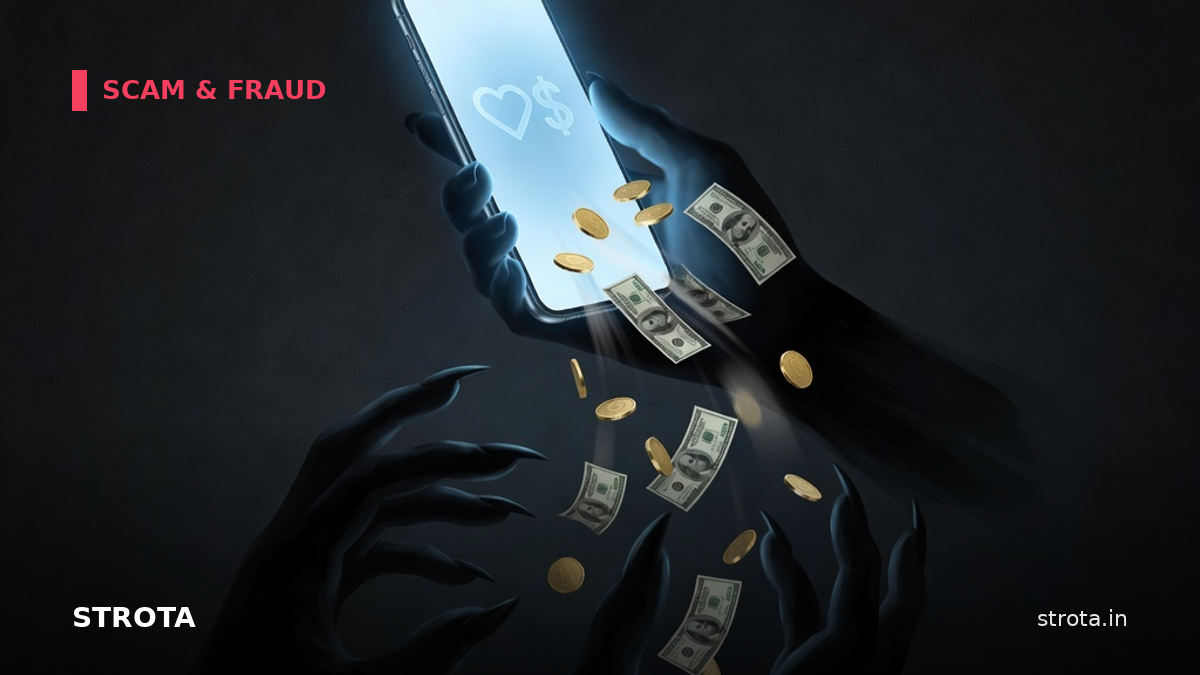
She thought she had found someone who finally understood her. Late-night messages. Shared dreams. A future together. Then came the tip about a can't-miss crypto opportunity—one that would secure their life together. She poured in her savings. The person she loved vanished. So did the money.
This is the anatomy of a modern financial horror story, and it's playing out thousands of times a day across the world. The U.S. Department of Justice is now trying to claw back $25 million in cryptocurrency linked to precisely this kind of operation—networks that blend the emotional manipulation of romance scams with the high-stakes pressure of fake investment schemes.
The forfeiture action, reported by CoinDesk, targets crypto wallets tied to what investigators describe as interconnected fraud networks. These aren't amateur operations. They're professional criminal enterprises that have refined their playbook through relentless practice.
Here's how the trap typically springs. First, contact—often through dating apps, social media, or even WhatsApp. The scammer invests weeks or months building trust, sometimes stealing the identity of public figures to seem credible. The U.K. financial journalist Martin Lewis has spoken publicly about fraudsters repeatedly impersonating him online, telling one outlet: "Am I losing this battle? Yes." His familiar face and reputation become weapons against people who recognize and trust him.
Only after the emotional bond is secure does the pivot come. The "friend" or "partner" mentions their own impressive investment returns. They share screenshots of growing balances. They introduce the victim to a trading platform—professionally designed, apparently legitimate, sometimes even populated with fake news articles vouching for its credibility. Australian regulators have warned of scammers creating "a very good clone" of real financial news sites to lure victims to fraudulent platforms.
The money flows in. Sometimes it's cryptocurrency. Sometimes it's traditional currency converted to crypto to make it harder to trace. The platform shows spectacular gains—until the victim tries to withdraw. Then come the taxes, the fees, the technical problems. The excuses multiply until communication stops entirely.
The scale is staggering. Dutch police recently dismantled one crypto investment scam network accused of stealing €100 million monthly. In India, authorities in multiple cities have broken up rings responsible for frauds ranging from ₹80 lakh to ₹34 crore. A 76-year-old American lost $1.6 million in savings to an AI-powered investment scam. The FBI has warned that cryptocurrency and AI scams now bilk Americans of billions annually.
What makes these crimes particularly vicious is their selectivity. Scammers often target older victims—people with accumulated savings and, sometimes, recent losses that leave them emotionally vulnerable. British courts recently jailed fraudsters behind an £11 million investment scam that specifically targeted elderly victims. The loneliness epidemic and the digital migration of financial services have created perfect hunting conditions.
The $25 million U.S. forfeiture represents a rare moment of potential recovery. Most victims never see a penny returned. A U.K. charity that helps fraud victims managed to recover £1 million—a significant sum that nonetheless represents a fraction of what's stolen. Circle, the company behind the USDC stablecoin, reportedly rebuffed police efforts to help scam victims, illustrating how the structure of crypto markets can frustrate even determined investigators.
For ordinary people, the pattern matters more than any single case. The red flags remain consistent: unsolicited contact from someone who becomes emotionally intense unusually quickly; reluctance to meet in person or video chat; any mention of exclusive investment opportunities; pressure to move conversations to private channels; and platforms that require crypto deposits to unfamiliar wallets.
The human need for connection doesn't disappear with age or circumstance. If anything, it intensifies. The scammers know this. They run their operations like customer service centers because, to them, victims are customers—sources of revenue to be cultivated with patience and psychological precision. The $25 million frozen by U.S. authorities is one frozen moment in a flow of stolen money that continues worldwide, minute by minute, message by message, broken heart by broken heart.
Sources and method
- U.S. seeks forfeiture of $25 million in crypto tied to romance and investment scams (CoinDesk)
- US seeks forfeiture of $25M in crypto tied to romance, investment scams (TradingView)
- Rajasthan Sees ₹387 Crore Cyber Fraud in 2026; Investment Scams Top the List (The420.in)
- Dutch police dismantle global crypto investment scam, arrest alleged mastermind (The Record from Recorded Future News)
- DOJ Moves to Seize $25 Million in Crypto Tied to Global Investment Scam Networks (tokenpost.com)
- Crypto giant Circle rebuffed efforts to help scam victims, police say (International Consortium of Investigative Journalists - ICIJ)
- ‘A very good clone’: news stories faked to lure victims to scam investment sites (The Guardian)
- Police take down investment fraud network that stole €100 million a month (Help Net Security)
More money stories
- IPO subscription tracked listing gains across 431 Indian IPOs, but it works as a sorter, not a direction call
- New moon, full moon, same Nifty: 19 years of data show no reliable lunar effect
- RBI opens a dollar window for 3 oil firms as the rupee nears 97
- Banks pay 5.67 per cent on new deposits while your EMI rises
- Air India adds Rs 1,200 fuel surcharge as jet fuel hits Rs 137
- EPF ceiling rises to Rs 25,000. Employers must not cut pay