The Weekend That Shook Oil Markets: How a Single Strait Became Everyone's Problem
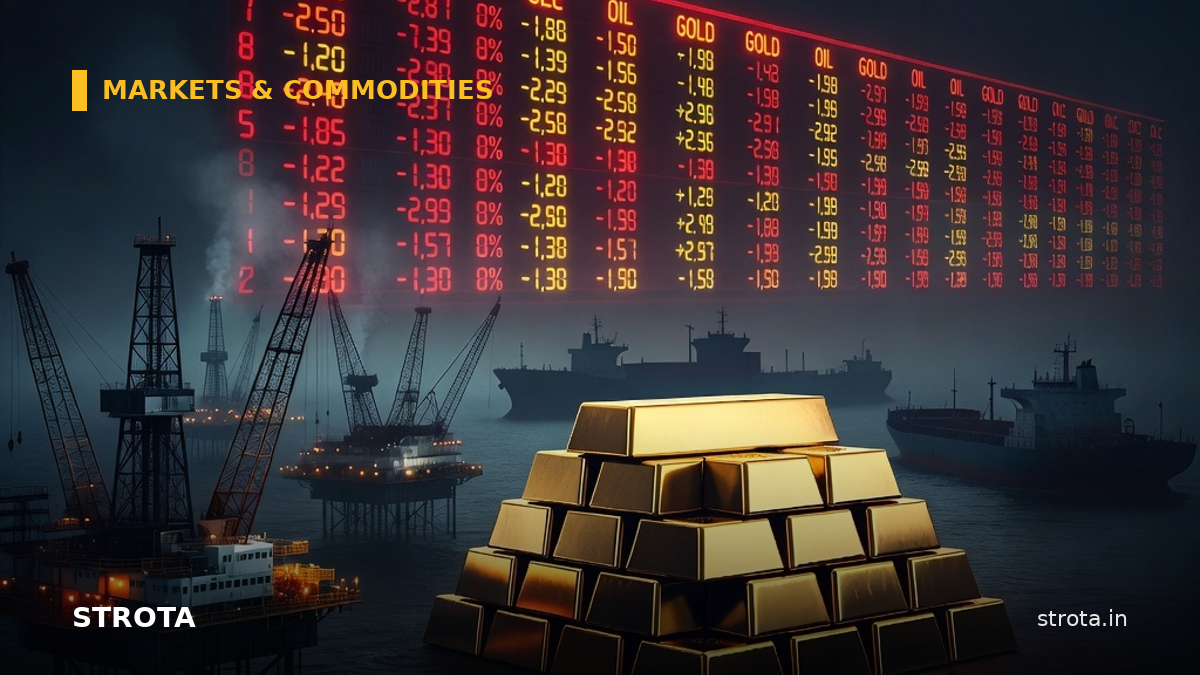
It started with explosions most people only read about in headlines. By the time markets opened Monday, the damage was already spreading—through trading screens, into fuel bills, and across kitchen tables where families calculate how far a paycheck will stretch.
US military strikes on Iran and retaliatory attacks have blocked the Strait of Hormuz, the narrow waterway through which roughly one-fifth of global oil shipments pass. The result: West Texas Intermediate crude broke $81 per barrel, Brent climbed above $85, and some grades saw 14% to 20% gains in a matter of days. For context, that reverses an entire month of easing prices that had briefly calmed inflation worries.
The mechanics are brutal in their simplicity. When tankers cannot pass, supply tightens. When supply tightens, prices rise. When oil prices rise, everything that moves—trucks, ships, planes, the plastic in your phone—becomes more expensive to produce and transport.
United Airlines delivered the first corporate casualty warning: nearly $6 billion in additional fuel costs now threatening its financial outlook. British Airways parent IAG, hotel giant IHG, and engine-maker Rolls-Royce led a broader slide in travel and industrial stocks. BP, paradoxically, found relief as the same price surge helped it cut net debt. The market giveth and taketh according to where you sit in the supply chain.
The inflation ghost, briefly exorcised in June, returned with July's oil rally. The British pound slipped as traders priced in renewed price pressures. India's rupee hovered near record lows against the dollar. Even as US stocks flirted with records, the underlying anxiety persisted—higher oil means higher inflation, which means central banks keep interest rates elevated, which means mortgages and car loans stay expensive.
China responded the way governments often do: by raising domestic gasoline and diesel prices, passing the cost to drivers. Yet Beijing's crude imports have actually plunged 40% to their lowest since 2018, a reminder that the world's largest oil importer is also navigating its own economic slowdown. That import collapse may be the only thing keeping prices from climbing even faster.
Cryptocurrency markets, often touted as hedges against traditional finance, offered no shelter. Bitcoin fell nearly 2% to $63,000. Ethereum dropped 3.98% to $1,828. Altcoins from BNB to Cardano corrected up to 11.31%. The narrative of digital assets as 'uncorrelated' assets crumbled—when geopolitical risk spikes, investors sell everything speculative to hold cash.
Gold, traditionally the refuge in chaos, behaved strangely. It steadied even as silver slid Rs 1,500 in Indian markets. Some analysts suggested oil's surge had revived bets on US rate hikes, making non-yielding gold less attractive despite the tensions. Markets, it seems, can only handle so many fears at once.
For ordinary households, the timeline of pain unfolds in stages. First, the pump price rises—already visible in China, coming soon elsewhere. Then, shipping costs feed into retail prices. Then, airlines adjust fares. Then, central banks, watching inflation metrics, delay the rate cuts that would ease mortgage burdens. The strike on Iran happened thousands of miles away. The bill arrives locally.
What makes this episode particularly unsettling is the fragility it reveals. Traders now warn the market is 'close to running on empty' as Hormuz disruptions continue. Some brace for $100 oil. The cushion of spare capacity that once absorbed shocks has worn thin through years of underinvestment and geopolitical erosion.
The Strait of Hormuz has been a chokepoint for decades. Yet each crisis feels more precarious than the last, the global economy more stretched, the room for error smaller. This time, the surge came not from OPEC decisions or economic boom, but from missiles and naval blockades—factors no consumer can predict, influence, or insure against.
For most people, the story ends not with trading positions but with the arithmetic of a monthly budget. When oil moves this fast, that arithmetic gets harder. The connection between distant conflict and domestic pressure, usually abstract, becomes suddenly, uncomfortably clear.
Sources and method
- Iran-US Tensions Keep Crude Oil, Global Markets On Edge. Here's Why (NDTV Business)
- Bitcoin falls nearly 2% to $63,000 as geopolitical tensions weigh on crypto markets (Economic Times)
- Iran-US Tensions Keep Crude Oil, Global Markets On Edge. Here's Why (NDTV Profit)
- US-Iran Conflict Escalates, International Oil Prices Surge Over 3%: WTI Crude Breaks $81, Strait of Hormuz Shipping Blocked (TradingKey)
- Oil Prices Surge Amid Ongoing Middle East Conflict (GuruFocus)
- Indian Markets Open Cautiously In Green Amid Oil Price Rise, Escalation Of Supply Disruptions Risk From Iran (Open Magazine)
- MCX Crude Oil prices continue to surge amid rise in US-Iran conflict; check today’s trade setup (Upstox)
- China raises gasoline, diesel prices after global oil surge (daily-sun.com)
More money stories
- Bitcoin ETFs took in $999 million in a day as the price cleared $87,000
- Five straight weekly losses for Indian government bonds, and the reason starts in Washington
- A Fed Hike, a Rupee Near 96 and Why the RBI October Call Just Got Hard
- One oil shock, two opposite answers: Tokyo hikes to a 31-year high, London sits still
- Brent hit $107.05 after a Saudi pipeline went down, and Goldman Sachs sketched a $120 scenario
- Iran's claim on 10 ships took crude to $101, and put one hundred twenty dollars back in the conversation