Old vs new tax regime: 80C, health cover and a home loan still don't beat the new one
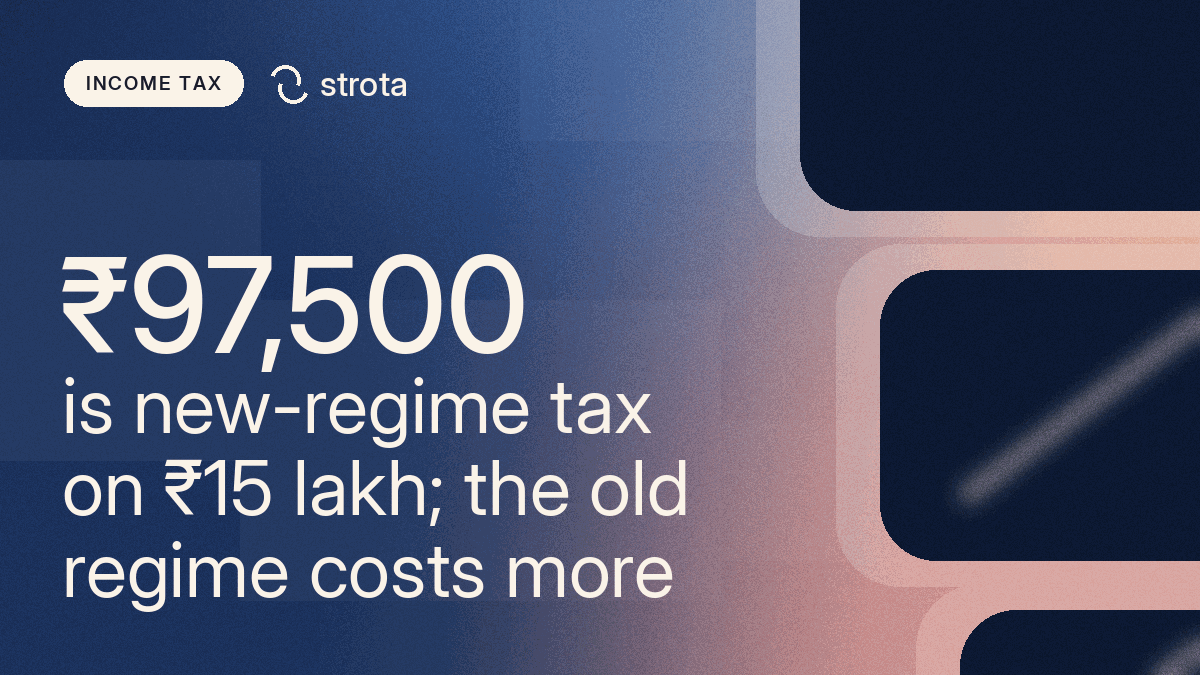
We ran the 2026-27 tax rules on salaries from ₹13 lakh to ₹60 lakh. The usual deductions never made the old regime cheaper. Only a sizeable HRA exemption did, and only for a narrow band of salaries.
If you are salaried, below 60 and still wondering whether your 80C, health-insurance and home-loan deductions justify the old tax regime for 2026-27, our numbers say they do not, at any salary up to ₹50 lakh. On a ₹15 lakh salary, the new regime takes ₹97,500 in tax, while the old regime with 80C, health insurance and home-loan interest takes ₹1,39,620.
How much do you need to deduct before the old regime wins?
The new regime is now the default, and it drops most of the deductions people grew up with, including 80C, health insurance and home-loan interest. In exchange it gives a ₹75,000 standard deduction and a rebate that wipes out tax on taxable income up to ₹12 lakh, so a salary of up to ₹12.75 lakh pays nothing at all. Above that the bill climbs: ₹26,000 at a ₹13 lakh salary, ₹1,92,400 at ₹20 lakh and ₹4,75,800 at ₹30 lakh.
We worked out, salary by salary, how much the old regime would have to let you deduct before both tax bills came out equal. The answer is large: ₹5,43,750 at a ₹15 lakh salary, ₹7,08,333 at ₹20 lakh, and ₹8,00,000 once you cross roughly ₹25 lakh. For scale, the full 80C limit is ₹1.5 lakh, so 80C on its own covers only a small part of what is needed.
Four sets of deductions, tested
We tried four typical bundles, adding one deduction at a time, on salaries from ₹13 lakh to ₹60 lakh in steps of ₹5,000. The first is the basic salaried kit: 80C of ₹1.5 lakh, a health-insurance premium of ₹25,000 and professional tax of ₹2,500, which comes to ₹1,77,500 in all. It never made the old regime cheaper, and at ₹15 lakh the old regime cost ₹1,04,520 more than the new one.
Adding ₹2 lakh of home-loan interest, which takes the total to ₹3,77,500, narrows the gap but does not close it. The old regime still cost ₹42,120 more at a ₹15 lakh salary and ₹1,03,220 more at ₹20 lakh. So even with a home loan on top of the usual deductions, the new regime stayed cheaper at every salary we tested.
The third bundle adds ₹50,000 put into your own NPS account, the National Pension System, for ₹4,27,500 of deductions in total. That helped only in a thin slice of salaries, from ₹52,35,000 to ₹54,85,000, a band sitting a little past the ₹50 lakh mark where a surcharge, an extra levy on top of tax for high earners, starts to apply. Employer contributions to NPS, which count in both regimes, were left out of the test, so they do not change this picture.
Where HRA changes the answer
The one bundle that worked added a house rent allowance exemption of ₹2.4 lakh, bringing total deductions to ₹6,67,500. HRA is the part of salary that people who pay rent can shield from tax, and with it the old regime was cheaper for salaries from ₹13,10,000 to ₹18,75,000. The biggest saving was ₹33,540 at a ₹13.5 lakh salary, and it shrank to ₹25,740 at ₹15 lakh and ₹8,060 at ₹18 lakh.
Past that band the advantage disappears, and from ₹20 lakh the old regime was dearer again, by ₹12,740 at ₹20 lakh and ₹41,340 at ₹25 lakh and above. Keep in mind that HRA depends on your rent, your basic salary and your city, and ₹2.4 lakh is only one example, so your own exemption could be bigger or smaller. Even where the old regime won, the gain ran to tens of thousands of rupees, not lakhs.
What this means for your salary
These results cover salary income only, and interest, capital gains or other income can change the outcome. Senior citizens also get different old-regime slabs, which this test did not cover. For a salaried person below 60 with no other income, though, 80C, a health policy and a home loan together do not get close to the deductions the old regime needs. On a ₹20 lakh salary, matching the new regime's ₹1,92,400 bill would take ₹7,08,333 of deductions, far more than the ₹3,77,500 those three claims add up to. Without a large HRA exemption, the new regime came out ahead at every salary we tested.
Frequently asked questions
Is the old tax regime better if I have a home loan?
Not in our test for salaried people below 60. Adding ₹2 lakh of home-loan interest to 80C and health insurance still left the old regime ₹42,120 dearer at a ₹15 lakh salary.
How much deduction do I need for the old tax regime to be better?
About ₹5,43,750 at a ₹15 lakh salary and ₹7,08,333 at ₹20 lakh, rising to ₹8,00,000 from about ₹25 lakh. These figures assume salary is your only income.
Is income up to ₹12 lakh tax-free in the new regime?
Taxable income up to ₹12 lakh gets a full rebate, and with the ₹75,000 standard deduction a salary of up to ₹12.75 lakh pays no tax.
Sources and method
This note is based on Strota's own backtest research. Historical results are not forecasts or investment advice; see the editorial standards for methodology and limitations.
More money stories
- Buying a share for its dividend? On the biggest payouts, ₹1 lakh lost ₹2,196 after tax
- RBI's 2022-23 rate hikes added ₹7,775 a month to the EMI on a ₹50 lakh home loan
- Bonus shares and stock splits: the price jump came before the ex-date, then faded for months
- ₹60,000 of gold scheme money buys ₹52,011 of gold once a 12% making charge and GST are paid
- Your gold scheme's start date has no Dhanteras effect, and 11 of 30 plans won't stack with festival offers
- Your ₹55,000 of gold savings: a jeweller's free month beat a gold ETF in 80 of 132 starts